
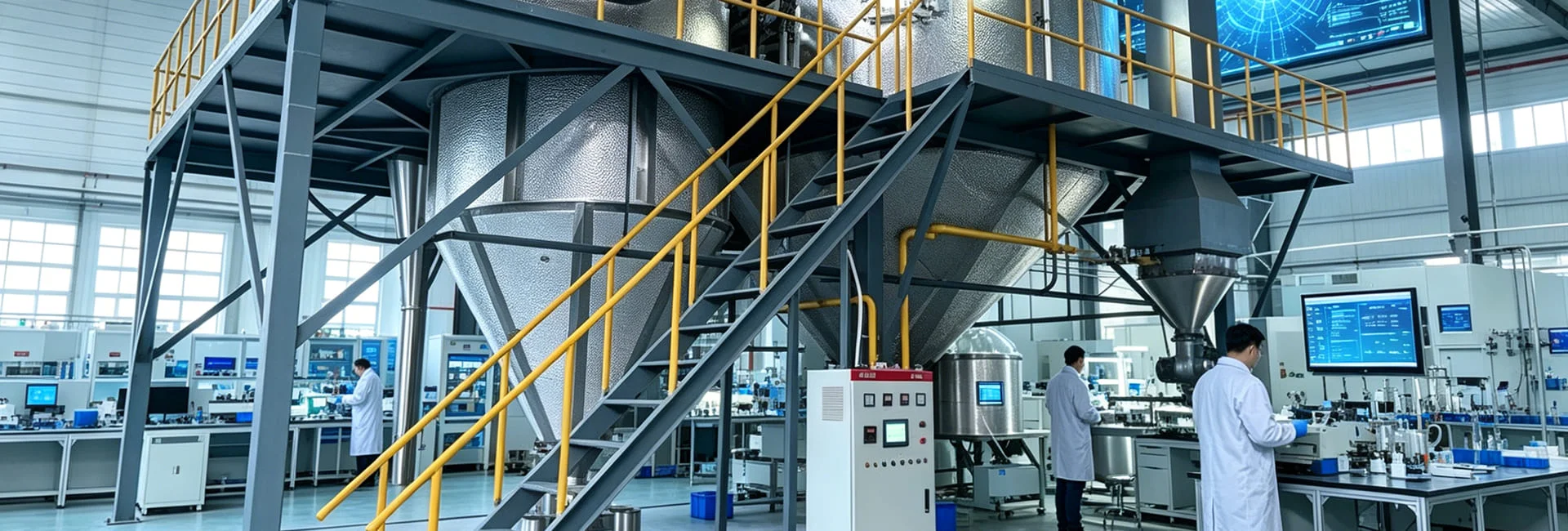
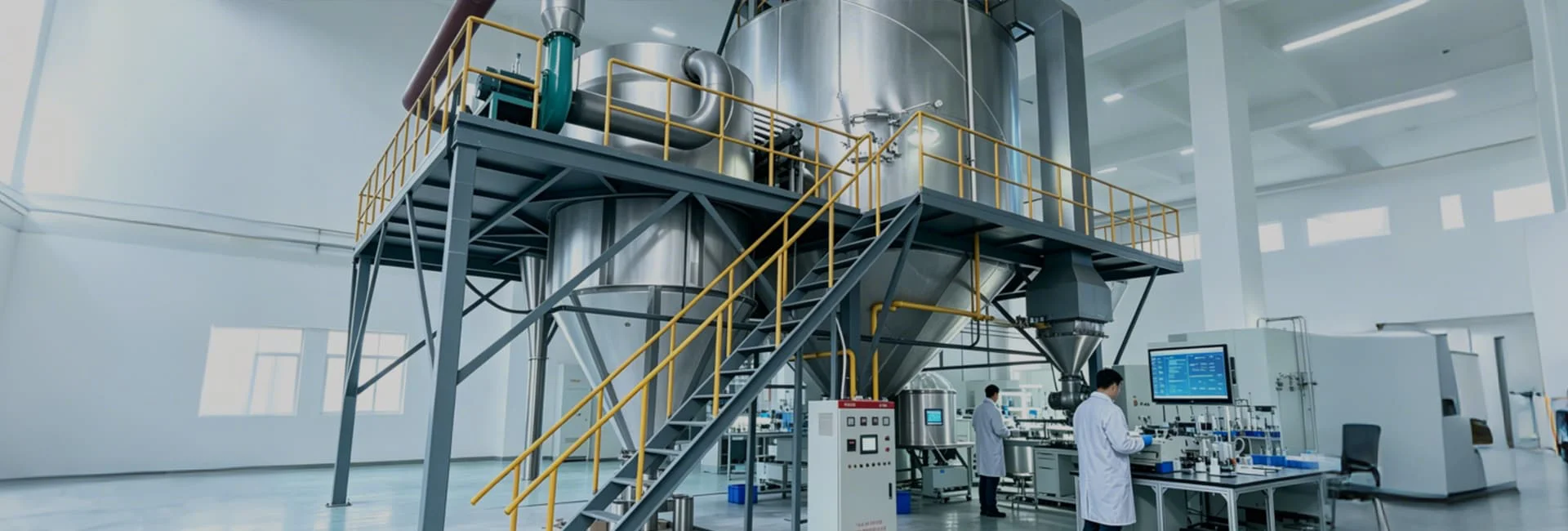
In modern industrial production and environmental protection engineering, dryers, as key material handling equipment, play a self-evidently important role. Whether in the fields of chemical, pharmaceutical, food processing, mining, agriculture, or environmental protection, dryers play a central role in transforming wet materials into standard solid products. So, how exactly do dryers achieve this precise process of "turning wet into dry"? The working principle behind it is the cornerstone of efficient production. The working principle of a dryer is essentially a physical process of heat and mass transfer. Its core lies in using thermal energy to vaporize the moisture (usually water or solvent) in the material, and removing the generated steam through specific airflow or mechanical means, thereby obtaining a dried product with low moisture content. Despite the wide variety of dryers on the market, such as fluidized bed dryers, spray dryers, rotary drum dryers, and belt dryers, their basic principles can be summarized into the following three key steps: First, heat supply and transfer. Dryers generate heat through a heat source (such as steam, heat transfer oil, hot air furnace, or electric heating) and transfer the heat to the wet material through conduction, convection, or radiation. For example, in rotary drum dryers, the material comes into direct contact with hot air, rapidly heating up through convective heat transfer; while in vacuum dryers, indirect conduction heating is used to evaporate the material at low temperatures. Efficient heat transfer is the core guarantee of the drying rate. Second, vaporization and migration of moisture. When the material absorbs sufficient heat, its internal liquid moisture gains energy, overcomes intermolecular forces, and transforms into gaseous water vapor. This process occurs simultaneously on the surface and inside of the material, forming a humidity gradient. The ingenious design of dryers lies in how to promote the continuous migration of moisture from the inside of the material to the surface by controlling temperature, pressure, and airflow speed, avoiding surface crusting or internal residue, thus ensuring uniform drying and product quality. Third, discharge of wet steam and environmental control. If the vaporized water vapor cannot be discharged in time, it will quickly saturate the drying environment, inhibiting further evaporation. Therefore, all efficient dryers are equipped with powerful moisture removal systems, such as induced draft fans, condensers, or vacuum pumps. By continuously introducing dry heat medium and discharging moist exhaust gas, the internal environment of the equipment is always kept at a relatively low humidity, creating favorable conditions for continuous drying. In closed-loop drying systems, solvents or heat energy in the exhaust gas can also be recycled, achieving the dual goals of energy conservation and environmental protection. It is worth mentioning that modern drying technology has evolved far beyond the simple "heating and drying" method. Taking our company's latest research and development of intelligent fluidized bed dryer as an example, it achieves a leap from "empirical operation" to "data-driven" by precisely controlling the inlet air temperature, air speed, and material residence time, combined with online moisture detection and automatic feedback adjustment. Under the influence of airflow, the material becomes fluidized, significantly increasing the heat and mass exchange area, and the drying efficiency is improved by more than 30%, while energy consumption is significantly reduced. In addition, for heat-sensitive materials (such as biologics and food extracts), low-temperature vacuum drying and spray drying technologies demonstrate their unique advantages. In a negative pressure environment, the boiling point of water decreases, allowing the material to complete dehydration at a lower temperature, effectively retaining active ingredients, color, and flavor. This is an important manifestation of the evolution of drying technology from "processing" to "quality assurance". In summary, the working principle of a dryer may seem simple, but it actually integrates the comprehensive wisdom of thermodynamics, fluid mechanics, mass transfer, and automation control. As a company deeply rooted in the field of industrial drying, we always believe that only a deep understanding of the principles can lead to the design of more efficient, energy-saving, and reliable equipment. Choosing the right drying technology is not only related to production efficiency, but also determines product quality and the sustainable development of the enterprise in the future.